

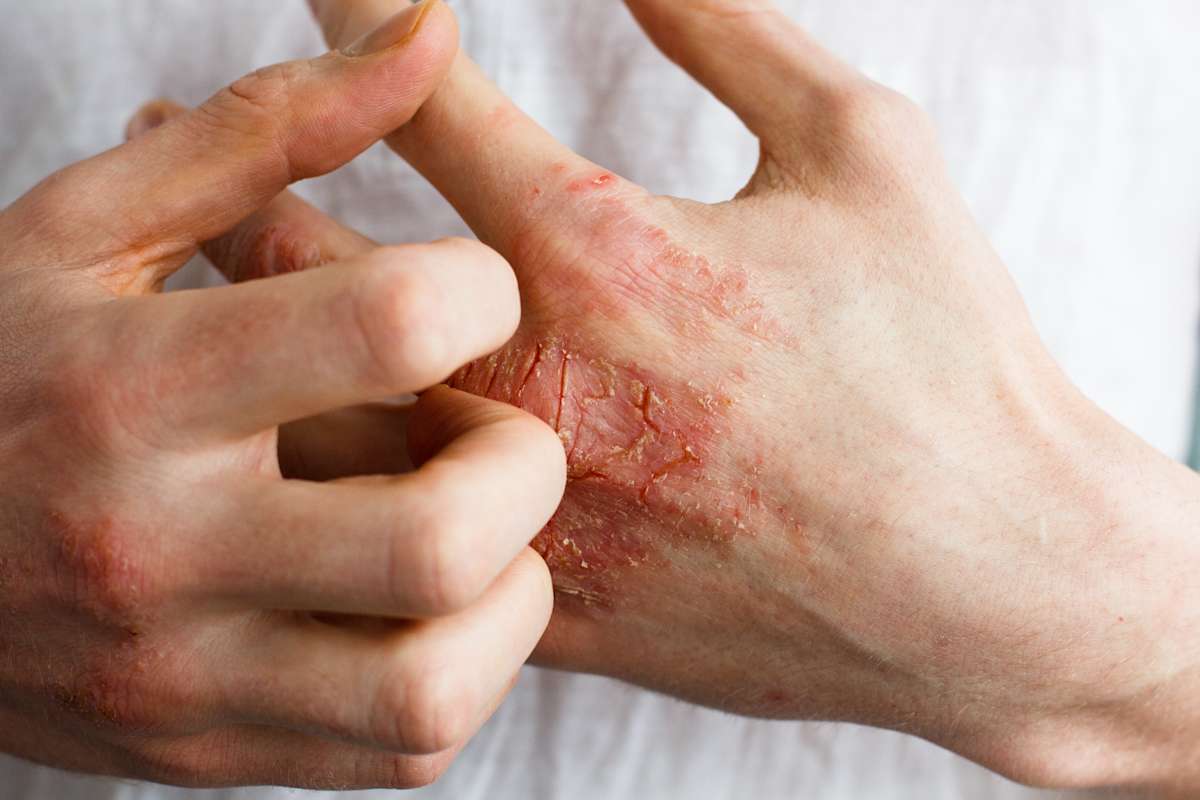
Walking into a dermatologist’s office with an angry, red patch of skin often brings a wave of frustration. You have likely tried every over-the-counter cream in the drugstore aisle, yet the itch remains relentless, or the flaking refuses to stop. When your skin is constantly inflamed, identifying the exact culprit feels less like a simple diagnosis and more like solving a complex medical riddle. Two of the most common chronic skin conditions, eczema and psoriasis, frequently look and feel strikingly similar to the untrained eye. Both cause red, irritated patches, both can flare up unexpectedly, and both test your patience on a daily basis.
Despite these overlapping symptoms, eczema and psoriasis are fundamentally distinct conditions driven by completely different internal mechanisms. Treating eczema as if it were psoriasis, or vice versa, will not only stall your healing process but can also exacerbate the flare-up. Understanding the nuances of your skin requires looking beyond the surface redness to examine where the lesions appear, how they feel, and what is happening beneath the skin barrier.
Understanding the Core Mechanisms
To truly grasp why your skin is reacting, it helps to look at the microscopic battlegrounds beneath the epidermis. Eczema, most commonly presenting as atopic dermatitis, is fundamentally an issue of a compromised skin barrier coupled with an overactive immune response. When you have eczema, your skin struggles to retain moisture and keep out irritants, allergens, and bacteria. This structural weakness lets environmental triggers penetrate easily, sparking an intense inflammatory cascade that results in dry, cracked, and intensely itchy skin.
Psoriasis, on the other hand, is an autoimmune disease driven primarily by systemic inflammation. In a healthy skin cycle, skin cells grow deep in the skin and rise to the surface over the course of about a month, where they eventually shed invisibly. For individuals with psoriasis, this process goes into overdrive. T-cells, a type of white blood cell, mistakenly signal the body to accelerate cell production. Instead of taking weeks, new skin cells surge to the surface in just a few days. Because the body cannot shed these cells fast enough, they pile up on the surface, creating thick, raised plaques covered in silvery-white scales.
Key Visual and Physical Differences
While both conditions share redness as a hallmark symptom, a closer inspection reveals distinct characteristics that set them apart. Pinpointing these differences is often the first step toward finding relief.
The Texture and Appearance of the Lesions
When examining a rash, the texture and scale formation provide crucial clues. Eczema patches tend to look dry, inflamed, and sometimes raw or swollen. They can weep fluid if they become severely infected from scratching, and over time, chronic scratching can cause the skin to become thick and leathery, a process known as lichenification. Psoriasis lesions, specifically plaque psoriasis, present as distinct, well-demarcated raised plaques with a dry, silvery-white buildup of scale. If you gently remove the scale, you might notice tiny bleeding points beneath, a phenomenon clinicians call the Auspitz sign.
The Intensity and Nature of the Itch
The sensation your skin produces is another major differentiator. Eczema is notoriously defined by an intense, deep-seated itch that often precedes the appearance of a rash. The urge to scratch can be overwhelming, leading to the classic itch-scratch cycle that damages the skin further and invites secondary infections. Psoriasis can also be itchy, but the sensation frequently leans more toward a burning, stinging, or deeply sore feeling. While individuals with psoriasis certainly experience itching, the physical discomfort often stems from the tightness and cracking of thick plaques over joints.
Typical Locations on the Body
Where the inflammation chooses to settle offers another reliable roadmap for identification. Eczema loves the bends and folds of the body. You will frequently find it nesting inside the elbows, behind the knees, on the neck, and across the wrists and ankles. In infants and children, it frequently appears on the cheeks and outer surfaces of the arms and legs.
Psoriasis tends to favor entirely different real estate. Classic plaque psoriasis commonly targets the extensor surfaces, meaning the backs of the elbows and the front of the knees. It is also notorious for appearing on the scalp, the lower back, the palms of the hands, and the soles of the feet. If you notice persistent, thick scaling along your hairline or behind your ears, psoriasis climbs high on the list of suspects.
Identifying Your Unique Triggers
Both eczema and psoriasis are chronic conditions that ebb and flow in response to external and internal triggers. Pinpointing what awakens your skin can dramatically reduce the frequency and severity of your flare-ups.
For eczema sufferers, the environment is often the primary antagonist. Common triggers include harsh soaps, laundry detergents with heavy fragrances, wool or synthetic fabrics, low humidity, and sudden temperature shifts. Stress is also a universal enemy for both conditions, flooding the body with cortisol and triggering systemic inflammation that immediately shows up on your skin.
Psoriasis flare-ups are frequently linked to immune system stressors. Strep throat or other viral and bacterial infections are notorious for sparking sudden outbreaks, particularly guttate psoriasis, which appears as small, drop-shaped spots. Skin trauma, known as the Koebner phenomenon, means that a simple cut, scrape, sunburn, or even a tight waistband can cause new psoriasis plaques to form directly over the injured site. Certain medications, including beta-blockers and lithium, have also been linked to triggering or worsening psoriasis.
Demographics and Overlapping Mysteries
While anyone can develop either condition at any stage of life, their typical timelines differ. Eczema frequently makes its debut in early childhood, often appearing alongside other allergic conditions like asthma and hay fever, forming what clinicians call the atopic triad. Many children outgrow eczema by their teenage years, though it can persist into or first appear in adulthood.
Psoriasis, conversely, can emerge at any age, but it most commonly peaks in two distinct windows: between the ages of twenty and thirty, and again between fifty and sixty. It affects men and women with roughly equal frequency and has a strong genetic component. If your parents or siblings deal with psoriasis, your statistical likelihood of developing the condition rises significantly.
In some cases, the lines blur entirely. A condition known as psoriatic erythroderma can cause widespread inflammation covering nearly the entire body, making clinical differentiation exceedingly difficult without a thorough medical evaluation. Furthermore, up to thirty percent of people with psoriasis eventually develop psoriatic arthritis, a painful inflammatory condition affecting the joints, which adds another layer of complexity that eczema does not share.
Seeking the Right Professional Care
Navigating chronic skin inflammation on your own can quickly become an exhausting cycle of trial and error. Because over-the-counter moisturizers and hydrocortisone creams only mask symptoms temporarily, partnering with a board-certified dermatologist is essential for long-term management.
A professional evaluation goes beyond a visual inspection. Your dermatologist will take a comprehensive medical history, evaluate your family background, examine your nails and scalp for subtle clues, and, if necessary, perform a small skin biopsy to rule out other conditions. This diagnostic precision ensures that your treatment plan is tailored to your specific pathology rather than generic symptom suppression.
Tailored Treatment Pathways
Once an accurate diagnosis is established, the therapeutic strategies for eczema and psoriasis diverge significantly, reflecting their unique underlying causes.
Managing Eczema
Treatment for eczema centers heavily on repairing the compromised skin barrier and calming local inflammation.
-
Rigorous Moisturization: Applying thick, fragrance-free creams or ointments multiple times a day locks in hydration and prevents micro-tears in the skin.
-
Topical Anti-Inflammatories: Topical corticosteroids or newer non-steroidal topicals like calcineurin inhibitors are prescribed to quiet active flare-ups.
-
Targeted Biologics: For severe, treatment-resistant atopic dermatitis, injectable biologic therapies target specific immune pathways, such as interleukin-4 and interleukin-13, to halt the inflammatory cascade at its source.
-
Lifestyle Modifications: Identifying and eliminating contact allergens, utilizing gentle cleansers, and managing stress levels form the foundation of daily prevention.
Managing Psoriasis
Because psoriasis is driven by rapid cell turnover and systemic immune activity, treatment strategies target both the surface buildup and the internal immune response.
-
Keratolytics and Topical Treatments: Ingredients like salicylic acid help soften and shed thick scales, while topical corticosteroids, vitamin D analogues, and retinoids slow down excessive cell production.
-
Phototherapy: Controlled exposure to narrowband ultraviolet B light under medical supervision helps slow the rapid growth of skin cells and reduces inflammation.
-
Systemic and Biologic Medications: Moderate to severe psoriasis often requires oral systemic medications or advanced biologic injections that target tumor necrosis factor or specific interleukins, effectively resetting the immune signals responsible for plaque formation.
Taking Control of Your Skin Health
Living with a chronic skin condition requires patience, resilience, and a willingness to listen closely to what your body is communicating. Whether you are managing the relentless itch of eczema or the persistent scaling of psoriasis, a definitive diagnosis is the turning point from confusion to clarity. By understanding the distinct mechanisms driving your symptoms and collaborating with a knowledgeable healthcare provider, you can build a sustainable care routine that restores comfort, confidence, and long-term health to your skin.